
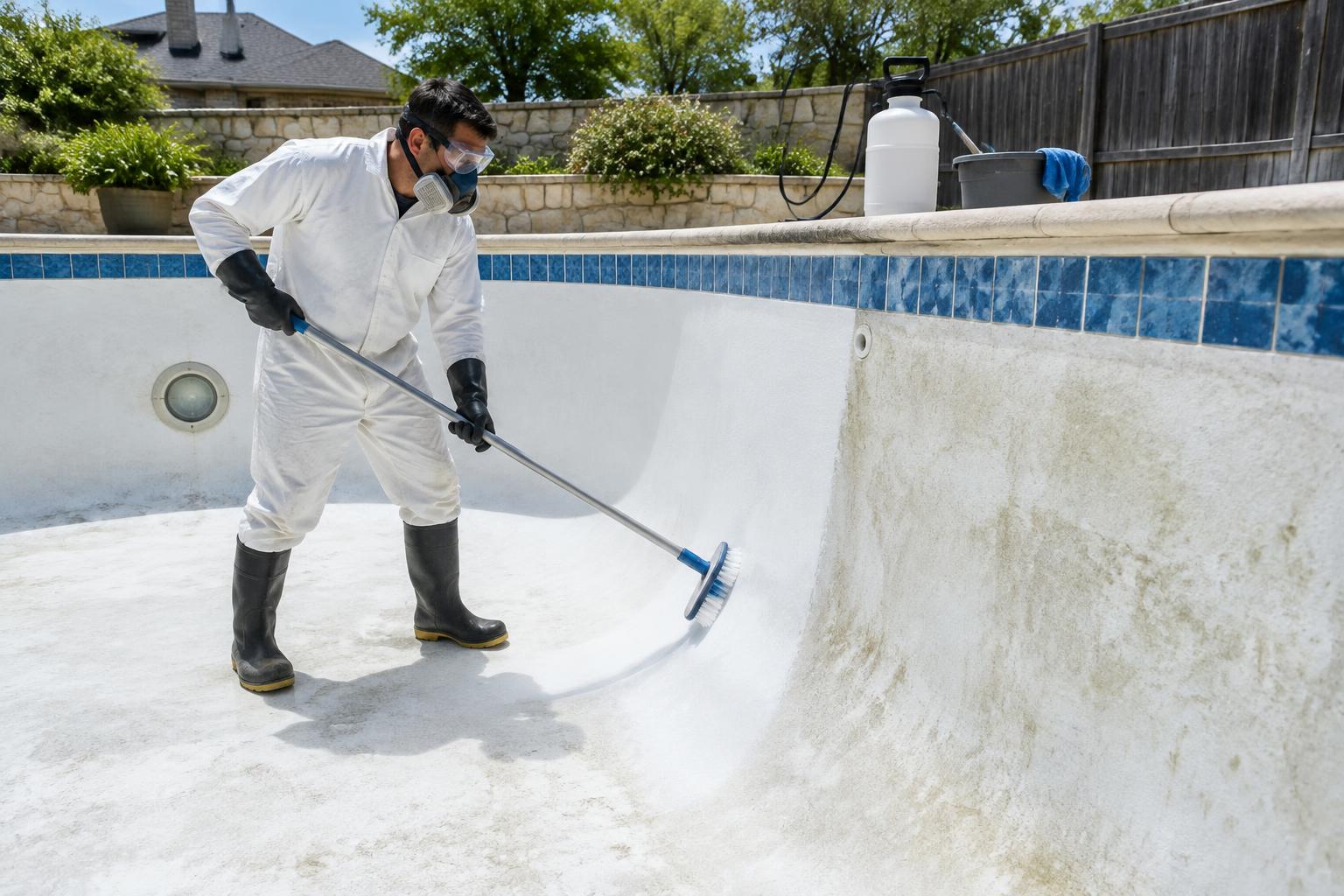
An acid wash is one of the most misunderstood pool services. Homeowners ask for it because it's cheaper than replastering, and some companies sell it because it's quick. Both are true. But it's only the right fix in specific situations, and it's worth understanding what it actually does before you pay for one.
Here's the process. We drain the pool completely, then apply a diluted muriatic acid solution to the plaster and scrub it by hand, section by section. The acid dissolves a thin layer of the plaster surface, taking the stains, algae, and calcium scale with it. We neutralize the wash with soda ash, pump out the wastewater properly, rinse, and refill. Done right, the pool looks dramatically cleaner.
The catch is in that phrase: it removes a layer of plaster. Plaster is only about half an inch thick to begin with, and every acid wash makes it thinner. If your plaster is already worn, rough, or hollow in places, an acid wash will expose more aggregate, open up more staining, and shorten the life of a surface that was already near the end. On a pool like that, you'd be spending money to make replastering more urgent.
The rule we use on estimates is simple. If the plaster is smooth and solid but stained, green, or scaled, an acid wash is a good value and can add a few years. If the plaster is rough, thin, delaminating, or showing the shell, we'll say so and quote replastering instead. We'd rather lose an acid wash job than sell you one that hurts your pool.