
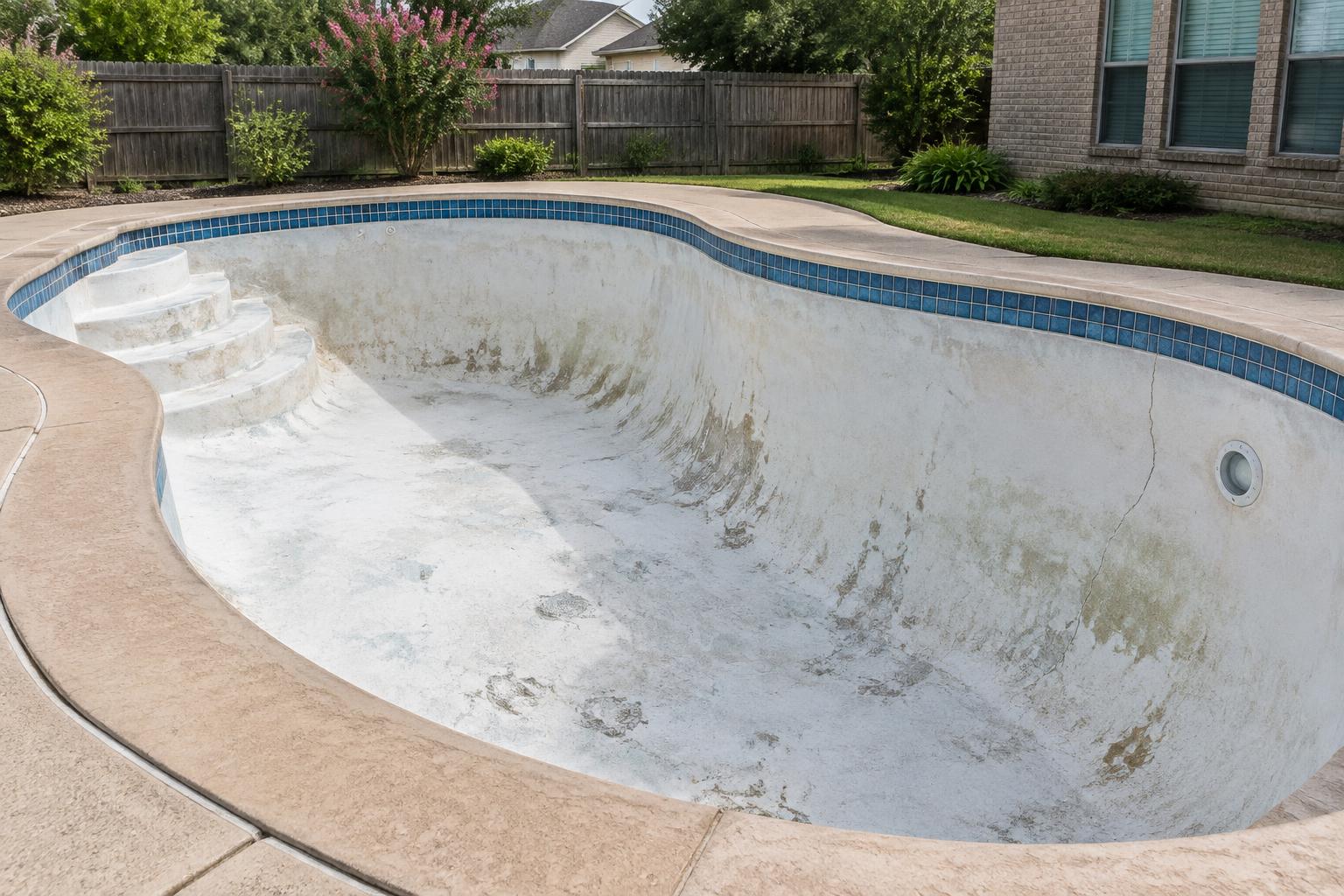
Pool plaster in North Texas lasts somewhere between ten and twenty years, depending on how the water was balanced and how hard the water was to begin with. When it starts to go, it rarely fails all at once. It gives you warnings. Here are the five we see most on estimates around Fort Worth.
First, rough texture. If your kids come out of the pool with scraped toes, the smooth surface layer has worn through and exposed the aggregate underneath. No amount of brushing fixes that. Second, stains that don't respond to chemicals or an acid wash: deep mineral and metal staining means the plaster has become porous enough that the stain is inside it, not on it.
Third, hollow spots. Tap the plaster with a pole and listen; a hollow sound means the plaster has delaminated from the gunite shell and will eventually crack and lift. Fourth, visible gunite or rebar. Grey or rust-colored patches are the shell showing through, and rebar exposed to water will keep rusting. Fifth, a pool that loses water with no obvious leak at the skimmer, light, or equipment. Cracked, porous plaster can weep enough to matter.
If you're seeing only stains on plaster that's otherwise smooth and solid, an acid wash may still buy you a few years. If you're seeing two or more of the signs above, replastering is the honest recommendation, and it's the moment to fix tile, coping, skimmers, and drains at the same time while the pool is empty. Either way, we'll tell you which one your pool actually needs.